Barefoot shoes and specific conditions: what you need to know
📚 Barefoot Series Part 4
- Part 1: Your feet, your posture, your spine
- Part 2: How to choose barefoot shoes
- Part 3: How to transition safely
- Part 4: Barefoot and specific conditions (this article)
⚠️ Important before you read on
I am a chiropractor, not a medical doctor. This article is for informational and educational purposes only. It is not medical advice, and it does not replace a consultation with a qualified healthcare professional.
If you have a specific diagnosed condition, please speak with your doctor, physiotherapist, or relevant specialist before making any changes to your footwear. Everything shared here is general information based on my clinical experience and current research. Individual situations vary enormously.
Read this as a conversation starter, not a prescription. 🙏
Parts 1, 2, and 3 of this series covered the foundations: why footwear may matter for your whole body, how to choose barefoot shoes, and how to transition safely. This last article is for people who have a specific condition and are wondering whether barefoot may still be for them.
Short answer: in many cases, yes. But the approach needs to be carefully adapted, and professional guidance is strongly recommended.
The kinetic chain reminder 🔗
Before diving into specific conditions, one important principle to keep in mind throughout this article: the body works as a chain, not in isolated parts.
Your feet adapt to what is happening above them just as much as the rest of the body adapts to what happens at the feet. A pelvis that is tilted, a hip that is restricted, or a lumbar spine that is compensating will all influence how the foot lands, loads, and moves with every step. The foot does not exist in isolation.
This means that addressing footwear alone may not fully resolve foot symptoms if there are unaddressed restrictions higher up the chain. And conversely, changing footwear may influence things well above the ankle. Both directions matter.
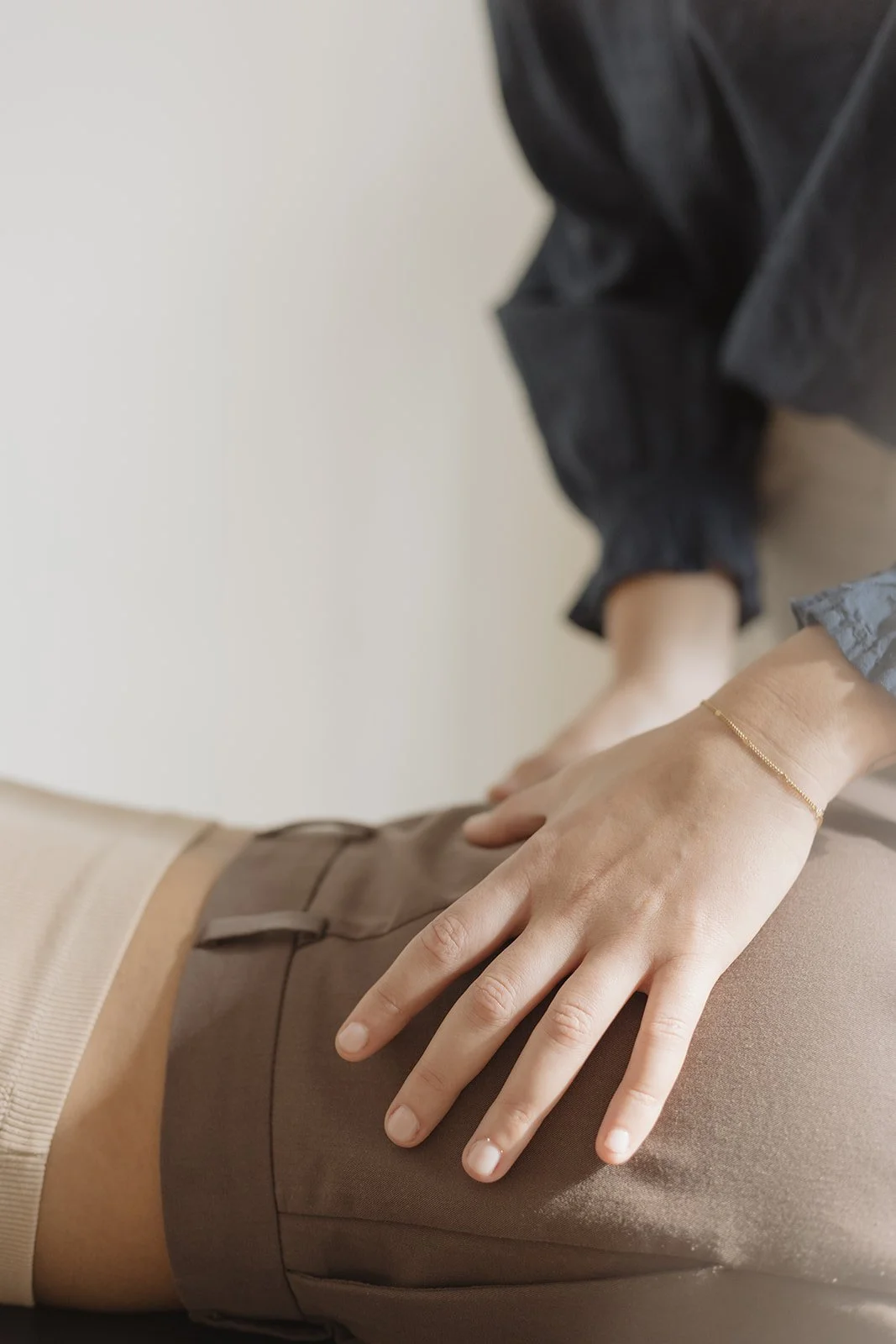
A restriction at the pelvis or hip may influence how the foot loads the ground with every single step.
Plantar fasciitis 🦶
This is the condition I hear about most in relation to barefoot shoes, and it's also the one that creates the most confusion.
The plantar fascia is the band of tissue running along the bottom of the foot. When it is under chronic tension, typically associated with a combination of restricted ankle mobility, tight calves, reduced foot muscle capacity, and compressive footwear, it may become irritated.
Conventional shoes with a raised heel and rigid sole may contribute to this pattern by keeping the calf in a shortened position and limiting natural foot movement. In that sense, more minimal footwear may be helpful in the long term by addressing some of those underlying contributors.
⚠️ However, during an active plantar fasciitis flare, a sudden change to zero drop may significantly increase tension on the plantar fascia and make things worse before they get better. If you are in an acute phase, this is not the moment to start a barefoot transition.
What may help: consistent calf stretching, eccentric loading, toe spreading exercises, and letting the acute phase calm before gradually introducing more minimal footwear. A physiotherapist can help you navigate this safely.
Achilles tendinopathy and calcaneal spurs
These two conditions are closely related. Both involve the Achilles tendon and its insertion at the heel, and both may be associated with chronically shortened calves, reduced ankle mobility, and heel-striking gait patterns.
A raised heel in conventional shoes keeps the calf in a perpetually shortened position. Zero drop asks the calf and Achilles to work through a fuller range of motion immediately. If the tendon is already irritated, that additional demand may provoke a flare.
The approach here mirrors plantar fasciitis: eccentric calf loading is the most evidence-supported exercise for Achilles adaptation. Go very gradually with zero drop. If you have an active flare, get assessed by a physiotherapist before making footwear changes.
With patience and proper preparation, many people report that chronic heel symptoms may reduce over time as the calf and Achilles adapt to fuller movement. But this is not guaranteed, and individual responses vary significantly.
Hallux valgus
As mentioned in Part 1, hallux valgus is not purely genetic. Footwear may play a significant role in its development and progression.
The wide toe box is the single most relevant feature for hallux valgus. It may allow the big toe to remain in a more natural alignment rather than being continuously compressed inward. Combined with daily toe spreading, toe spacers, and big toe propulsion exercises, some people notice a gradual reduction in discomfort over time.
A full reversal of an established hallux valgus is unlikely. But preventing further progression and reducing associated discomfort may be achievable with consistent attention to footwear and exercise. If the bunion is inflamed or causing sharp pain, get it assessed before starting any new footwear approach.
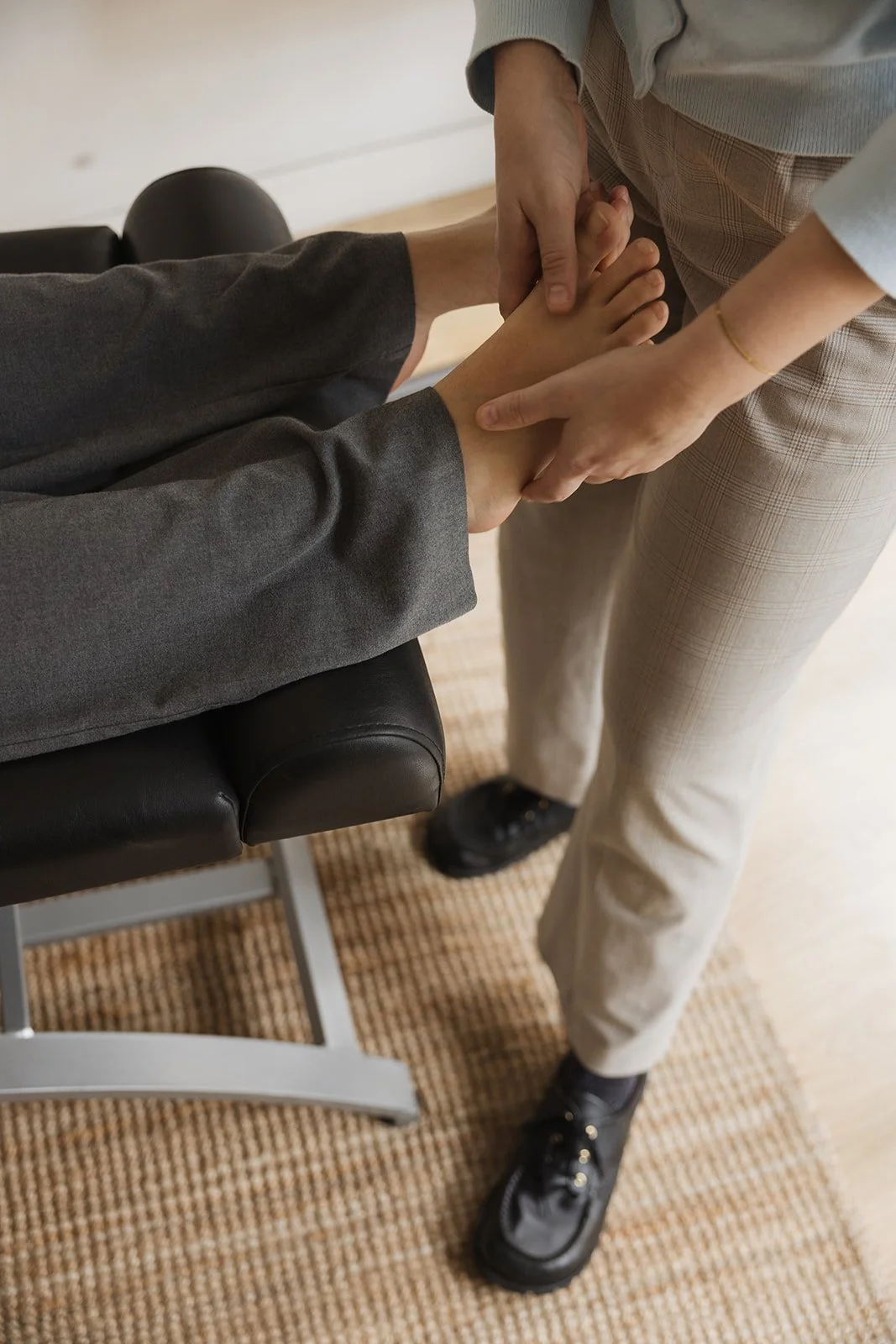
Foot assessment looks at the whole picture: toe alignment, arch function, ankle mobility, and how the foot connects to everything above.
Flat feet
Flat feet are one of the most common reasons people are told they need orthotics. And while orthotics have their place, the conversation is more nuanced than most people realise.
An important distinction: function over structure. A true structural flat foot, where the bony architecture of the foot is genuinely flat regardless of load, is relatively uncommon. What is far more common is a functional flat foot: the arch collapses under load because the muscles and soft tissues supporting it are not engaging effectively. These are very different situations.
A functional flat foot may respond well to gradual strengthening through more minimal footwear, because the foot is being asked to actively support itself rather than being passively propped up. Orthotics support the arch passively, but they also reduce the stimulus for those muscles to activate. Over time, a foot that is always supported may lose even more intrinsic capacity.
This is not an argument against orthotics. They serve an important purpose, especially in the short term or for structural conditions. It is simply a reminder that the foot, like any other part of the body, may respond to appropriate loading and movement stimulus. Function over structure, where possible.
If you have flat feet and pain, please get assessed before making any footwear changes. The distinction between structural and functional flat foot matters enormously for how you approach this.
High arches
High arches present a different challenge. Rather than collapsing under load, the high-arched foot is often rigid and may absorb shock less efficiently. This can be associated with increased load on the metatarsals, heel, and ankle.
Barefoot shoes with slightly more cushioning (such as Altra Running models) may be a more appropriate starting point for high arches than very thin-soled options. The wide toe box and flexibility benefits still apply. The gel insole tip from Part 2 is particularly relevant here.
Knee discomfort
Knee discomfort is often downstream of something happening at the foot, the hip, or both. A foot that cannot pronate or supinate naturally changes the rotation of the entire leg with every step, which may influence how the knee is loaded. Similarly, a hip restriction changes how the knee absorbs and distributes force.
Some people with chronic knee discomfort notice changes once their foot function improves. This is not a promise of any outcome. But it is a reason to consider the full kinetic chain rather than treating the knee in isolation.
A full postural assessment, including the feet, hips, and spine, can provide a clearer picture of what may be contributing to knee symptoms. This is exactly the kind of assessment I do at a first consultation. You can read more about it in my post on your first chiropractic appointment.
Pregnancy 🤰
The ligaments of the foot, like all ligaments during pregnancy, are affected by relaxin. The foot may spread and change shape during pregnancy, and arch support that felt comfortable before may feel different.
Barefoot shoes, with their wide toe box and flexible sole, often feel more accommodating during pregnancy precisely because they allow for natural changes in foot shape without restriction. Zero drop during pregnancy is generally considered fine, but listen to your body and avoid sudden changes.
If you have significant pelvic or lower back discomfort during pregnancy, a chiropractic assessment that includes postural and foot evaluation may be helpful. You can read more in my post on chiropractic care during pregnancy.
Children 👧👦
For children, this is not a maybe. Children's feet are still developing. The muscular, ligamentous, and bony architecture of the foot forms largely during childhood, and the footwear worn during those years may play a significant role in that development.
Rigid, narrow shoes during childhood may contribute to reduced intrinsic foot strength, narrower toe spread, and less natural gait mechanics. Barefoot and minimal footwear gives the foot the space and stimulus it needs to develop properly.
Barefoot time at home, on varied surfaces, is ideal at every age. For shoes, wide, flexible, and lightweight options are the priority. I cover specific brand recommendations in Part 2 of this series.
Frequently asked questions
I have been told I need orthotics. Can I still transition to barefoot shoes?
Orthotics and barefoot footwear are not always mutually exclusive, at least not in the short term. Some people use orthotics while gradually building foot strength, then reduce their dependence over time. Have a conversation with the professional who prescribed them before making any changes.
I have diabetes. Can I wear barefoot shoes?
Diabetes may affect foot sensation and circulation, which changes the risk profile for any footwear change. Please discuss with your healthcare provider before transitioning to more minimal footwear.
My doctor recommended cushioned shoes for my condition. Should I ignore that advice?
No. This series is for informational purposes only. If you have a specific diagnosis and a professional recommendation, speak with that professional before making footwear changes. What I share here is general information, not individual advice.
How do I know if barefoot shoes are helping or making things worse?
Track your symptoms honestly over time. Mild soreness that improves week by week may be adaptation. Symptoms that worsen, plateau at a painful level, or create new problems are a signal to slow down and get reassessed by a professional.
I have a foot condition and want to transition. Where do I start?
Start with a professional assessment. A physiotherapist can evaluate your specific situation and guide the transition. A chiropractic assessment may also be helpful to understand what is happening higher up the kinetic chain that could be contributing to your foot symptoms.
📖 My full guide on barefoot shoes, exercises, and brand recommendations is available in French. If you read French, you can find it here: Bien Bouger Commence par les Pieds → 🇫🇷
Your feet are remarkable structures. Whatever condition you're working with, they deserve attention, patience, and the right kind of support. 💙
Want a full postural and foot assessment in Barcelona? Book a first consultation.
Book your first consultation →Lea Salgado, Chiropractor · Barcelona · leaquiropractica.com