How to choose barefoot shoes: a practical guide
📚 Barefoot Series Part 2
- Part 1: Your feet, your posture, your spine
- Part 2: How to choose barefoot shoes (this article)
- Part 3: How to transition safely (coming soon)
- Part 4: Barefoot and specific conditions (coming soon)
So you've decided to give barefoot shoes a try. Good. But then you open a browser, search "barefoot shoes," and suddenly you're looking at 47 different brands, conflicting Reddit threads, prices ranging from 30€ to 250€, and let's be honest, some designs that are... questionable at best. It's very easy to end up looking like you're wearing elf shoes. 🧝
Let me make it simple.
After going through my own barefoot transition, years of being active on social media talking about this topic (with millions of views on this content on Instagram), and writing an entire guide on the subject (in French, sorry anglophone friends 🇫🇷), here is what actually matters when choosing barefoot shoes.
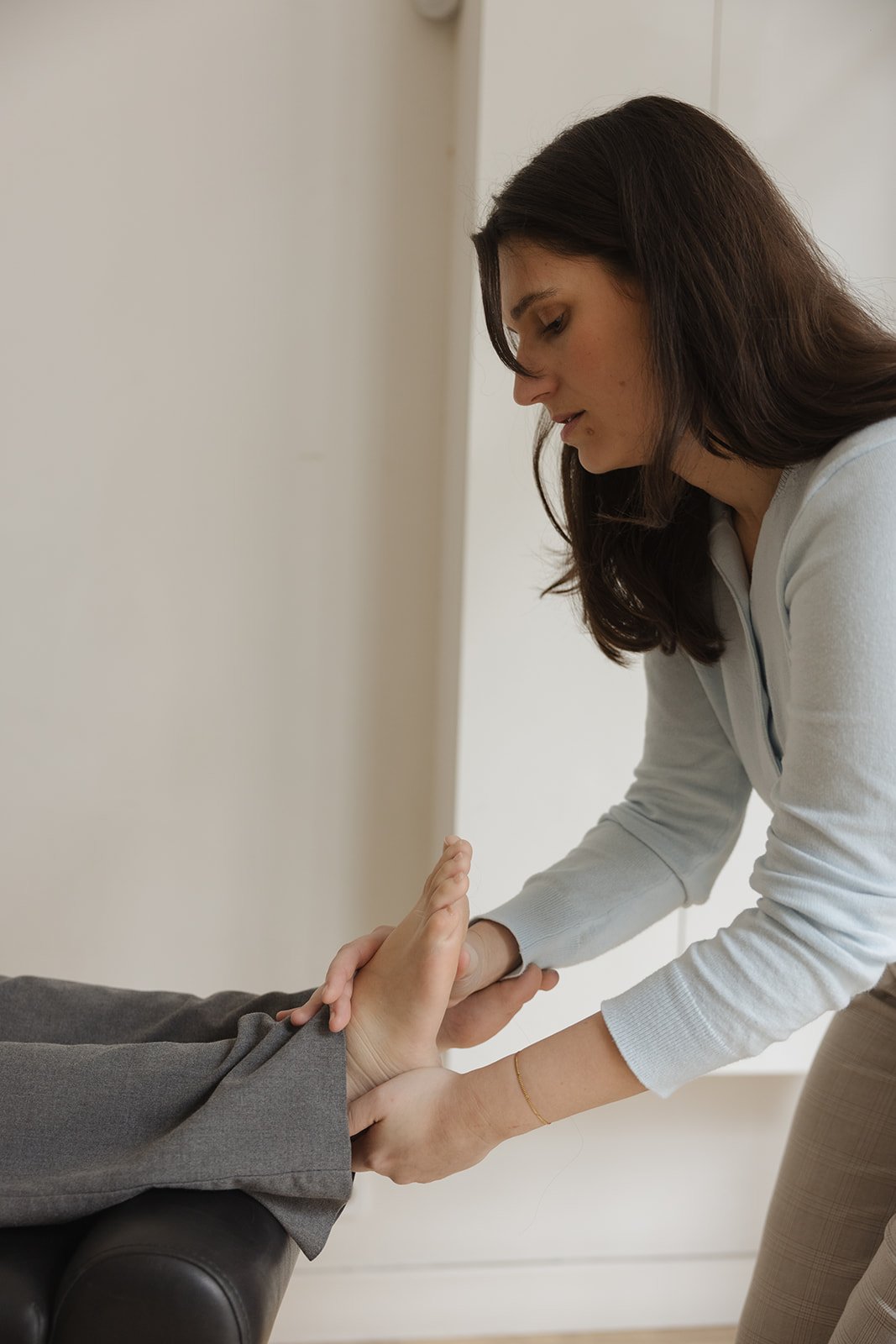
The foot has 26 bones, 33 joints, and over 100 muscles. Give it the space to actually use them.
The 4 criteria that actually matter
Not all "barefoot" or "minimalist" shoes are created equal. Some brands use the word loosely. Here is what to actually look for:
1. Wide toe box 👣
This is the single most important feature, and honestly, everyone would benefit from this, whether they're interested in barefoot or not. Your toes should be able to spread naturally inside the shoe without being compressed. Look at the shoe from above: the widest part should be at the toes, not the midfoot.
Many brands now have specific wider-fit ranges within their collections, so it's worth checking even if you don't find standard sizing wide enough.
To test: stand in the shoe and press the top lightly. You should feel your toes clearly but have room to spread. If your toes are pushed together, the shoe is too narrow, no matter what the label says.
2. Zero drop (or low drop as a starting point)
Zero drop means no height difference between the heel and the toe. Your foot sits flat, as it would on the ground barefoot.
There's a persistent cliché that the back "needs" a heel for support. The reality is that the human body is remarkably well designed and managed perfectly well before the modern shoe industry arrived. A heel raise modifies your lumbar curve and keeps your calf muscles in a chronically shortened position all day.
That said, if you've been wearing heeled shoes your whole life, zero drop from day one can overload the Achilles and calf. A 4mm drop as a transition option is completely fine. Even better: alternate between pairs. Wear your zero-drop shoes part of the day, your regular shoes for the rest, and progressively shift the balance over weeks. Your body will thank you for the patience.
3. Thin and flexible sole
You should be able to roll the shoe up easily. The sole should flex with your foot, not resist it.
Now, there is a genuine debate here. We live on concrete and asphalt, not grass and forest floors. Some people, especially those with active conditions like plantar fasciitis, may benefit from a little more cushioning, at least in the short term.
💡 Hot tip: you can buy a barefoot shoe with a thin sole and add a cheap gel insole from the pharmacy for a few euros. You get the wide toe box and flexibility benefits while adding a little cushioning during the transition or for specific activities. Best of both worlds.
To test flexibility: hold the shoe at the toe and heel and bend it. If it resists, it's too rigid.
4. Lightweight and minimal structure
No arch support, no motion control, no thick cushioning. The shoe should feel like almost nothing on your foot. The foot does its own work.
A word on fit and sizing
Barefoot shoes tend to run differently from conventional shoes. Because of the wide toe box, sizing can feel unfamiliar.
Here is a general guide for toe space:
- Closed shoes (trainers, boots): ideally around 1cm of space from your longest toe to the end of the shoe
- Sandals and open styles: slightly less is fine, around 0.5cm, since the foot doesn't slide forward
- Children's shoes: a little more room is better, as feet grow quickly
If you're between sizes, always go up. And if you can, try before you buy. In Barcelona, I recommend visiting Barefoot You, where you can try on a wide range of brands and get proper advice.
Shoes by use case 👟
Everyday and urban 🏙️
For city walking, you want ground protection without losing flexibility. My favourites: Flamingo Life Barefoot for a good everyday option, Mexas for sandals, and Ohne Projekt and Barebound for something more stylish and design-forward. These are the brands I actually wear and recommend when people want something that doesn't look like outdoor gear.
Sport and gym 🏋️
For the gym, I personally wear the Courtside by Feelgrounds. For a more budget-friendly option, Xero Shoes has solid choices. For more technical training, Vivobarefoot has performance models. For padded sports or if you have specific foot conditions, Altra Running is worth looking at: it's zero drop but with more cushioning. And Hobbi Bear is another option worth exploring.
For running specifically: please make the transition carefully, do the strengthening exercises from Part 3, and ideally speak to a physiotherapist or running coach before switching.
Work and smart casual 👞
Yes, barefoot dress shoes exist and they're actually good now. I love the ballerinas by Bareberne, and Be Lenka has excellent loafers and moccasins that work for professional settings without looking clinical.
Kids 👧👦
This is non-negotiable for me. Children's feet are still developing and need freedom of movement. A rigid shoe at a young age may prevent natural muscular development. Even Zara has some flexible options. For a proper selection, the best resource in French and Spanish is Petit Pas de Géant, which specialises entirely in barefoot for children.
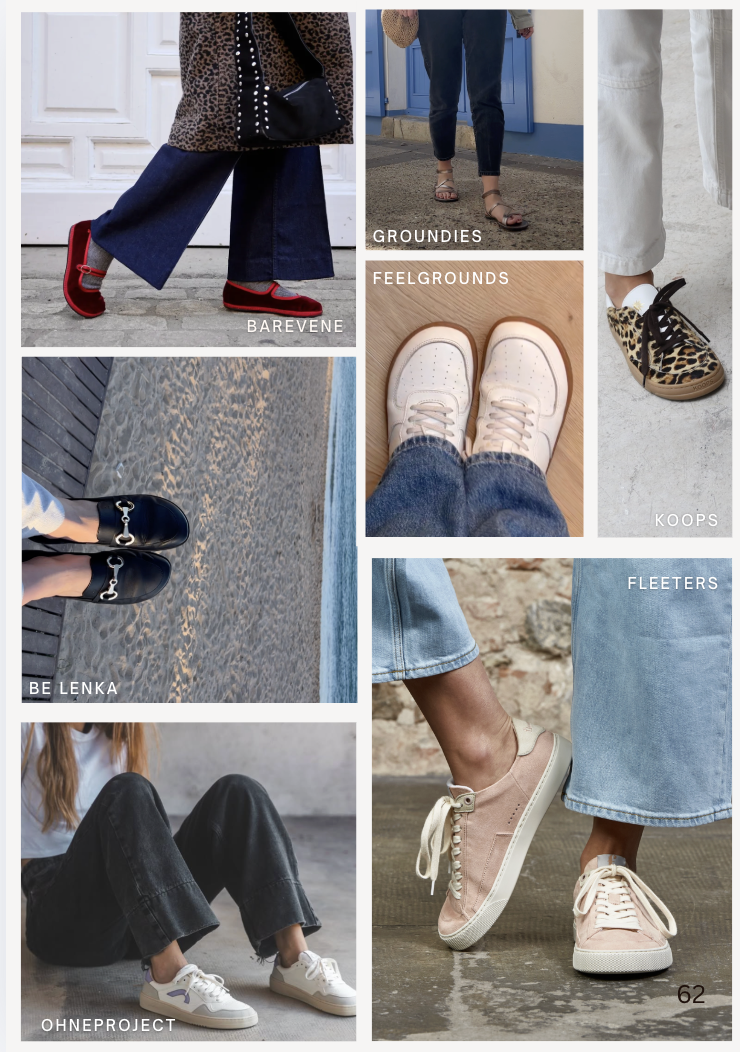
Wide toe box, zero drop, flexible sole: three features that make a barefoot shoe.
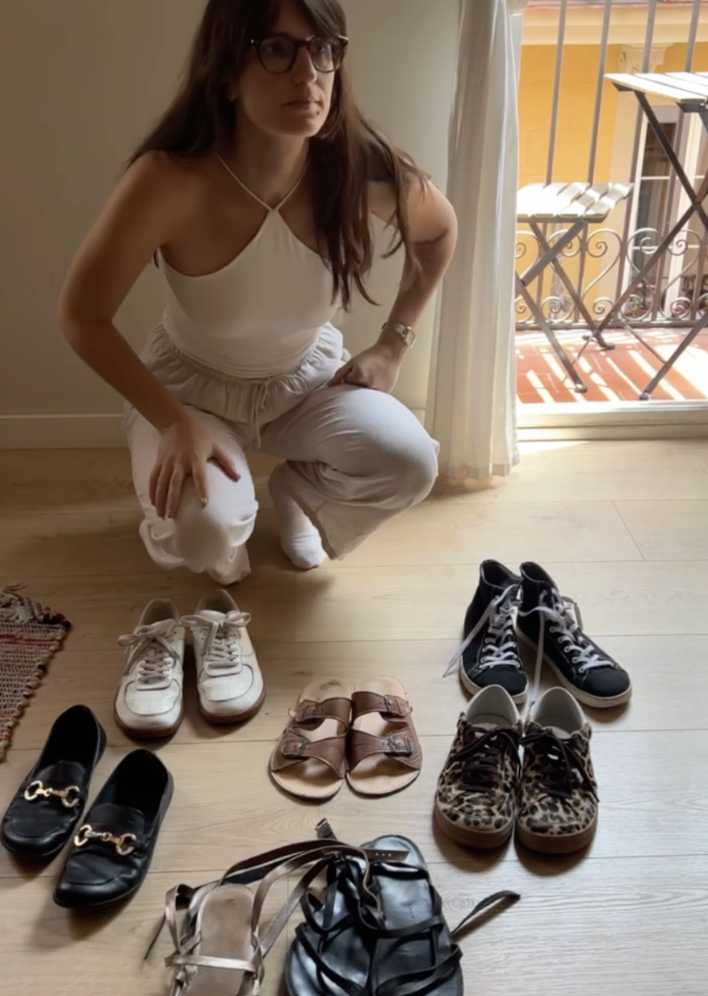
Not all barefoot shoes look the same. The range has expanded enormously in the last few years. 👟
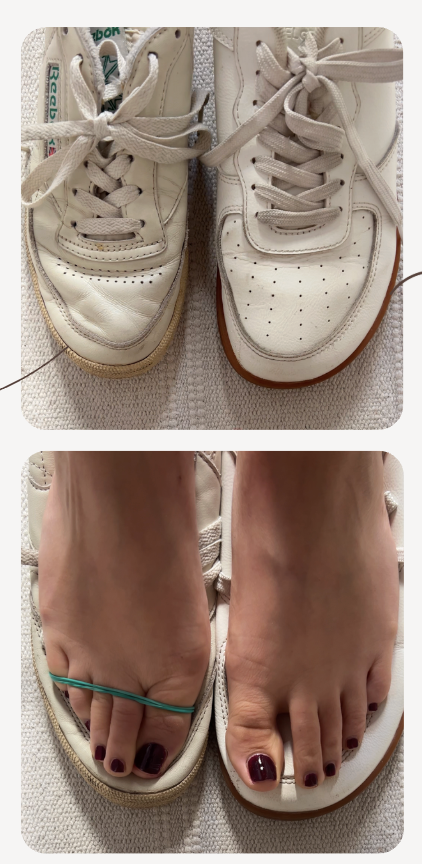
Barefoot shoes have come a long way from the elf shoe era. 😄
My current go-to picks
After years of testing, here is what I actually wear: Barebound and Ohne Projekt for everyday and style, Bareberne for smarter occasions, Vivant for a versatile option, and Vivobarefoot when I need something more technical.
My full curated selection of models, with photos and links, is in my guide: Bien Bouger Commence par les Pieds. Currently in French only. 🇫🇷
What about price?
Barefoot shoes can be expensive. Here is how I think about it: the price is largely justified by design and production. Most serious barefoot brands manufacture in Europe with small production runs, which naturally increases the cost. You're not paying for foam and branding, you're paying for considered construction.
One thing to keep in mind: because some soles are extremely thin, they can wear through faster than conventional shoes, particularly if you tend to land on your heels. This is also a sign that your gait needs some work. The transition exercises in Part 3 will help with this.
💸 Looking for a more accessible entry point? Vinted has a solid second-hand barefoot market. Many people buy barefoot shoes, find the transition too fast, and sell them barely used. A good way to try before committing to full price.
⚠️ Before you buy: a reminder on transition. The best shoes in the world won't help if you wear them too much too fast. Feet, calves, and Achilles tendons that have been in conventional shoes for years need time to adapt. Start slowly. Very slowly. Part 3 of this series covers exactly how to do this safely.
Frequently asked questions
Are expensive barefoot shoes worth it?
For me, the price is mostly justified by design and production: most serious brands manufacture in Europe with small runs, which increases costs. That said, you don't need to start with the most expensive pair. Xero Shoes and Be Lenka offer solid options at more accessible price points. And Vinted is always there.
Can I find barefoot shoes in Barcelona?
Selection in shops is limited, but Barefoot You in Barcelona stocks multiple brands and allows you to try before you buy. Most people also order online. Vivobarefoot, Xero Shoes, and Feelgrounds all ship to Spain.
What if I can't find a wide enough toe box?
Several brands have introduced wider-fit ranges within their collections specifically for this reason. Sizing up often helps too. If you have hallux valgus or naturally wide feet, Vivobarefoot and Groundies are known for their wider lasts.
Should I buy barefoot shoes for my children?
Yes. For me this is an absolute recommendation. Children's feet are still developing, and the freedom to move naturally during those years matters enormously. It's one of the most impactful things you can do for their long-term postural development. Start at Petit Pas de Géant for a curated selection.
The right pair of shoes is one that gives your foot the space and freedom to do what it was designed to do. Start there. 💙
Want to understand how your posture and spinal function connect to your footwear? Book a first assessment in Barcelona.
Book your first consultation →Lea Salgado, Chiropractor · Barcelona · leaquiropractica.com