How do I fix my teen's posture?
Hunched over their phone. Shoulders forward. A backpack that looks too heavy. If you've searched this, you already know the picture.
Here's what actually helps.
Posture is body awareness, not a fixed position
Posture is your ongoing sense of where your body is in space, and how easily you move between positions. That awareness can be learned at any age, but it tends to be picked up faster when you're young, while movement patterns are still forming rather than deeply set. It's why I specialise in paediatric care and why the first six years matter so much. It's not a closed window though. Posture can be worked on at any stage, teens included.
Why teenage years matter
Fast growth. Bones, muscles and joints developing quickly. Habits formed now tend to last. Teenage life today is also largely sedentary: school, screens, homework, more screens.
That doesn't make screen time automatically the problem. What matters more is what happens around it: staying still for long stretches without moving. A short break every 30 minutes changes that considerably. Regular sport, ideally outdoors with other people rather than solo screen time, shifts things further.
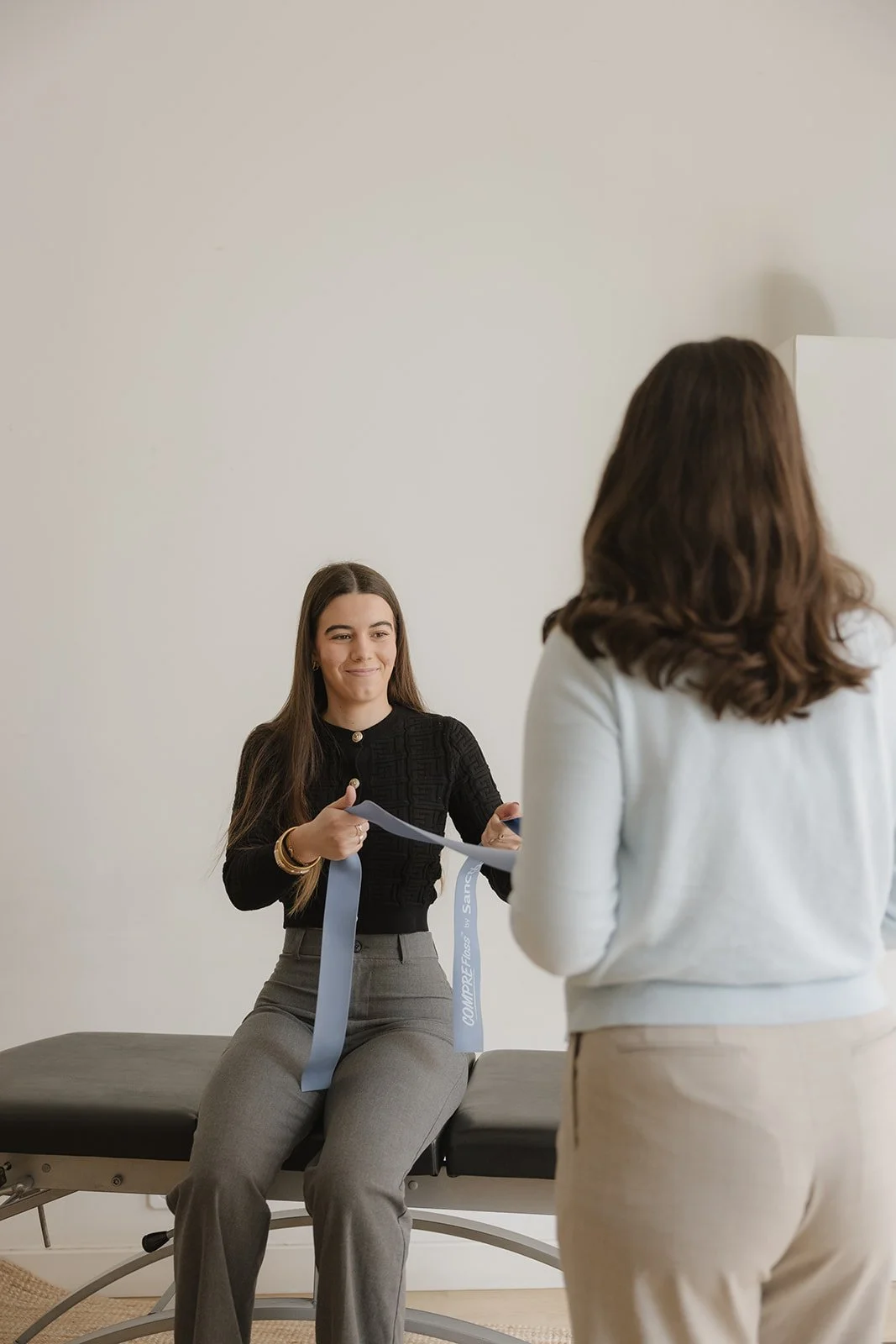
Growth, screens, and a mostly sedentary school day: the three things shaping teenage posture right now.
A deal that works better than commenting on their posture
Telling a teenager to sit up straight rarely works, and mostly creates friction. A better approach: propose a deal instead. If they take a two minute stretch break every 30 minutes during homework or screen time, you don't comment on their posture the rest of the time. It shifts the focus from being corrected to building their own habit, which is really the point anyway.
When a physical reminder is genuinely needed in the moment, a light tap or a finger placed on the spine, no words, no audience, works far better than a comment said out loud, especially in front of others. It gets the message across without the friction or the embarrassment.
Lead by example
This works both ways. If you work from home, take your own tech breaks. Hold your phone at eye level instead of looking down. A big exercise ball to sit on during homework or remote work helps too, it naturally invites more movement than a fixed chair. And when possible, working on the floor at a low table for part of the day, rather than always at a desk or in bed, gives the joints more variety.
What's worth watching
Most teenage posture changes are simply growth outpacing muscle coordination temporarily, and tend to even out with movement and the habits above. One thing I see very often in practice: teenagers with genuinely weak postural muscles, not because anything is wrong, but because sport and general movement have quietly dropped out of the daily routine. Strength work matters here as much as awareness does.
Worth a professional look rather than waiting: a visible asymmetry, one shoulder or hip clearly higher, or a spinal curve visible when bending forward.
This matters especially for scoliosis, more common in girls, often appearing during growth spurts. Scoliosis needs proper diagnosis and monitoring by the right specialist, not something chiropractic does. But general postural check ins, including with a chiropractor, can be part of what catches something worth following up on. Starting earlier tends to mean more options later.

A proper spinal assessment gives a clearer picture than a quick look, which is why it's part of every consultation.
Where chiropractic fits
I regularly assess teenagers' spinal function during this growth period. Part of that is proprioception, how well the nervous system senses body position, closely tied to postural awareness. Supporting that sense may help a teenager notice and adjust their own posture more naturally, rather than being told from the outside. It's an assessment, not a one visit fix. More on my Families page.
A word on motivation
Teenagers care how they come across, and that's worth using rather than fighting. Amy Cuddy's talk on power poses, the idea that how you hold your body shapes confidence and how others perceive you, tends to land with teenagers in a way health advice alone doesn't. Some of her original hormonal claims were later challenged by other researchers, worth noting. The core idea still holds attention: posture affects how you come across.
Frequently asked questions
Is bad posture common in teenagers?
Growth spurts often outpace muscle coordination for a while, which shows up as posture that looks off. It tends to even out with movement, strength, and awareness rather than needing to be corrected directly.
Is scoliosis common in teenagers?
More common than realised, particularly in girls during growth spurts. It needs proper diagnosis by the right specialist, and earlier monitoring tends to mean more options.
Can chiropractic help teenage posture?
An assessment shows how the spine is functioning, including proprioception and body awareness, both closely linked to posture.
What helps day to day?
A short stretch break every 30 minutes, regular outdoor sport, and screen height at eye level, ideally with the adults in the house doing the same.
Want a spinal and postural assessment for your teenager in Barcelona?
Book a consultation →Lea Salgado, Chiropractor · Barcelona · leaquiropractica.com