Finding calm in under 5 minutes: a nervous system reset
We often talk about stress, but do we really understand what's happening in the body?
To keep it simple, you have two main modes in your nervous system:
- Fight or Flight (the Sympathetic System): your survival mode. Great for running away from a tiger.
- Rest and Digest (the Parasympathetic System): your recovery mode. Great for sleeping, digesting, and recovering.
Here is the plot twist: you can't be in both states at the same time. It's either fight or flight or rest and digest. And your brain, made for survival, doesn't differentiate between a real danger (a tiger chasing you) and modern stress (a passive-aggressive email, financial worry, or traffic). 🐯
Your body releases the same stress hormones for a deadline as it would for a life-or-death situation. You end up stuck in "survival mode" while sitting at your desk. I see that every day in practice as a chiropractor. Sometimes I want to tell my patients: "wake up, you are hurting yourself by not addressing your stress levels." But I'll write a blog post instead. 🙃
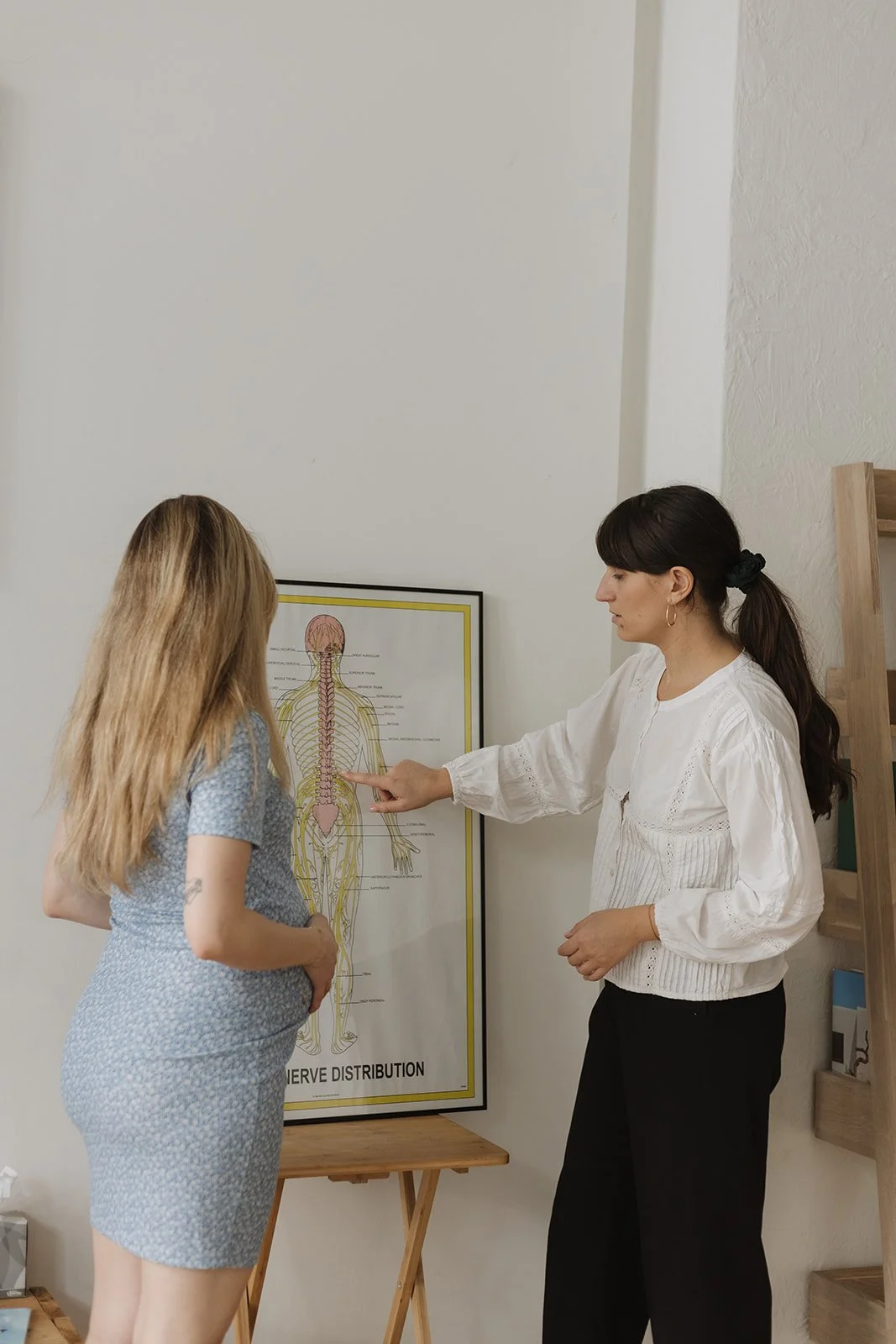
The spine is the main communication highway between your brain and your body. When it has interference, everything downstream may be affected.
Why getting adjusted may help
For some patients, getting adjusted feels like hitting the reset button on their fuse box. In fact, 37% of patients in my practice reported feeling significantly less stressed after their second visit, based on an internal clinic survey conducted pre and post care plan in 2024.
But while I work on your spine to support nervous system function, you have a role to play at home too. If you want to understand more about the connection between the spine and the nervous system, I wrote about it in my post on why I go to the chiropractor when I'm not in pain.
Here are my favourite, evidence-based ways to support your nervous system at home and signal safety to your brain.
7 ways to support your nervous system in under 5 minutes
1. The Long Exhale 🫁
When you inhale, your heart speeds up. When you exhale, it slows down. To support a calmer state, focus on the exhale.
2. Legs Up the Wall 🦵
By elevating your legs, you support blood flow back to the heart, which activates baroreceptors (pressure sensors) that may signal your brain to downregulate and relax.
3. The Panoramic Gaze 👀
Stress is associated with tunnel vision (literally, it's a survival mechanism). By consciously widening your field of view, you may signal to your brain that you are safe.
4. The Ear Massage 👂
A branch of the Vagus Nerve surfaces near the upper neck and ear. That's one reason I pay particular attention to this area during adjustments.
5. Intuitive Stretching 🐈
Close your eyes and check in with your body: where do I feel tight? What would feel good right now?
6. Shake It Out 🎶
Sometimes the nervous system holds onto energy that benefits from being released through movement. Singing loudly (vibrations stimulate the vagus nerve), shaking your whole body, sprinting, or dancing can all support this process.
7. Lay Down on a Pilates Ball 🏐
Especially supportive when your body feels tight through the middle. Inflate the ball just a little so it's soft.
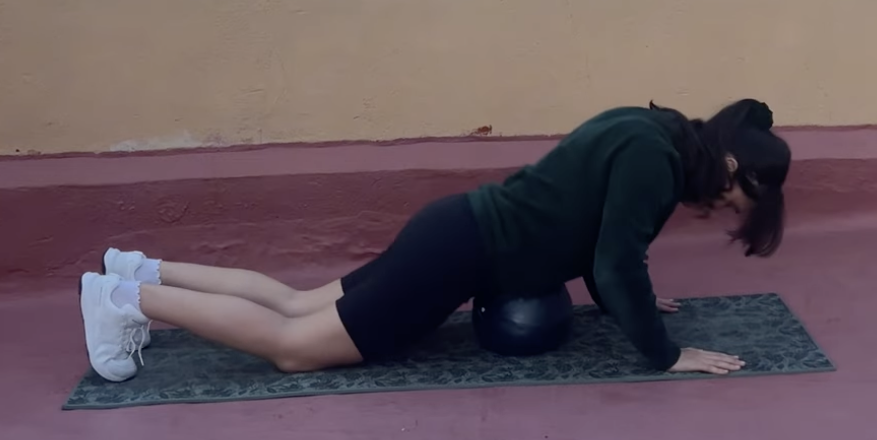
The pilates ball technique: gentle, accessible, and one of my favourites for nervous system support at home.
One is enough 🙌
You don't have to do them all. Pick just one every day for the next week. Your nervous system (and your back) will thank you.
And if you've been noticing recurring back pain, tension headaches, or that general feeling of being "off", it might be worth getting a proper assessment to understand what's actually going on. I wrote about the signs to look out for in my post on 7 signs your body is asking for help.
Want to support your nervous system from the inside out? Book a first consultation in Barcelona.
Book your first consultation →Lea Salgado, Chiropractor · Barcelona · leaquiropractica.com